The relationship between the energy costs of the Bitcoin mining and the Bitcoin price
Bitcoin mining is the backbone of the Bitcoin network. It secures transactions, validates blocks, and keeps the system decentralized. However, the process is not free—it consumes massive amounts of energy.
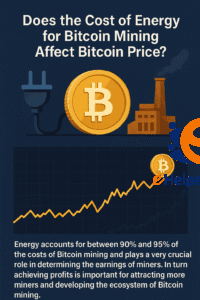
According to Digiconomist, mining consumes around 30 TWh annually, comparable to the energy usage of entire countries. In fact, electricity accounts for 90–95% of total mining costs, making it the most critical factor in determining miners’ profitability and indirectly influencing the Bitcoin price Ahrefs SEO Tutorial.
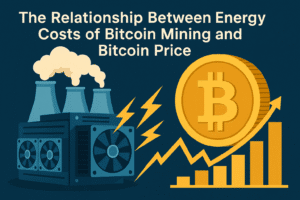
Energy Costs and Bitcoin mining
Mining involves solving complex cryptographic puzzles. The harder the puzzle, the more computational power is required, which translates directly into higher energy consumption.

Countries with cheap power like China (hydropower in Sichuan) and Iceland (geothermal energy) became global hubs for mining. Low energy costs allow miners to remain profitable even when Bitcoin’s price drops 5 Basic SEO Tips To Improve Your Website.
Factors Affecting Energy Costs
Cheap energy availability – hydropower, geothermal, or subsidized electricity.
Hardware efficiency – modern ASICs are far more energy-efficient than GPUs.
Network difficulty – higher difficulty increases power requirements.
Does Energy Cost Affect Bitcoin Price?
The key question: does the cost of energy dictate Bitcoin’s price? In theory, yes—it establishes a production floor. But in practice, speculation often pushes the price much higher than production costs.
Historical Insights
China once controlled more than 60% of global hash power, thanks to cheap electricity.
Iceland attracted mining giants like Genesis Mining with its affordable geothermal and hydropower, at times producing Bitcoin at extremely low costs.
Technological Advances in Bitcoin mining
Advancements in hardware and cooling systems have made mining more efficient. Yet, competition quickly squeezes profit margins, forcing miners to continually innovate.
Profitability and Energy Costs
Profitability depends on the spread between the Bitcoin market price and production cost. If the price drops below production costs, miners either shut down or migrate to cheaper energy regions.
Renewable Energy in Bitcoin mining
The future points to sustainability. Predictions suggest that over 60% of mining could rely on renewable energy such as solar, wind, and hydropower by 2025.
This shift not only lowers costs but also reduces the environmental footprint of mining.
Expert Opinions and Models
Economist Adam Hayes built a pricing model linking Bitcoin value to energy costs. He concluded that improvements in energy efficiency could lower Bitcoin’s market price over time.
Other analysts, however, argue that speculation and market demand have a stronger impact than energy costs.
Mining Difficulty and Network Security
As mining difficulty increases, energy consumption rises. This strengthens Bitcoin’s security but also forces smaller miners out of the market due to higher costs.
Halving Events and Energy Costs
Bitcoin halving events reduce miner rewards, meaning miners must expend more energy for the same output. This can increase production costs and put upward pressure on prices if demand remains strong.
Speculation vs. Real Cost
Energy costs create a baseline for Bitcoin’s production, but speculation often drives the market. Investor sentiment, institutional adoption, and global events can overshadow production expenses.
Future of Bitcoin mining
The industry’s future includes:
Greater efficiency from advanced hardware.
Wider adoption of renewable energy.
Regulatory pressure on carbon-intensive mining.
Geographic diversification of mining operations.
External Influences
Government policies, like China’s ban on mining, dramatically reshape the industry. Global energy crises, subsidies, and renewable energy incentives also impact where mining is profitable.
FAQs
Q1: How much energy does Bitcoin mining consume yearly?
About 30 TWh annually.
Q2: Why is electricity the largest mining cost?
Because solving cryptographic puzzles requires massive computational power that consumes electricity.
Q3: Does cheaper energy always reduce Bitcoin’s price?
Not always. Market speculation often drives prices higher than production costs.
Q4: Why are China and Iceland major mining hubs?
Due to cheap renewable energy sources like hydropower and geothermal energy.
Q5: What role does renewable energy play in Bitcoin mining?
It lowers costs and reduces environmental impact, with predictions of 60% reliance by 2025.
Q6: Do energy costs directly control Bitcoin’s market value?
They influence miner profitability but are not the sole determinant of price.
Conclusion
Energy costs remain the largest component of Bitcoin mining, shaping miner profitability and geographic distribution. However, while costs set a production floor, the Bitcoin price is more heavily influenced by speculation, demand, and regulation.
As renewable energy adoption grows, mining will become more sustainable, but the connection between energy and price will always exist.
Reference Video: The relationship between Bitcoin mining and price